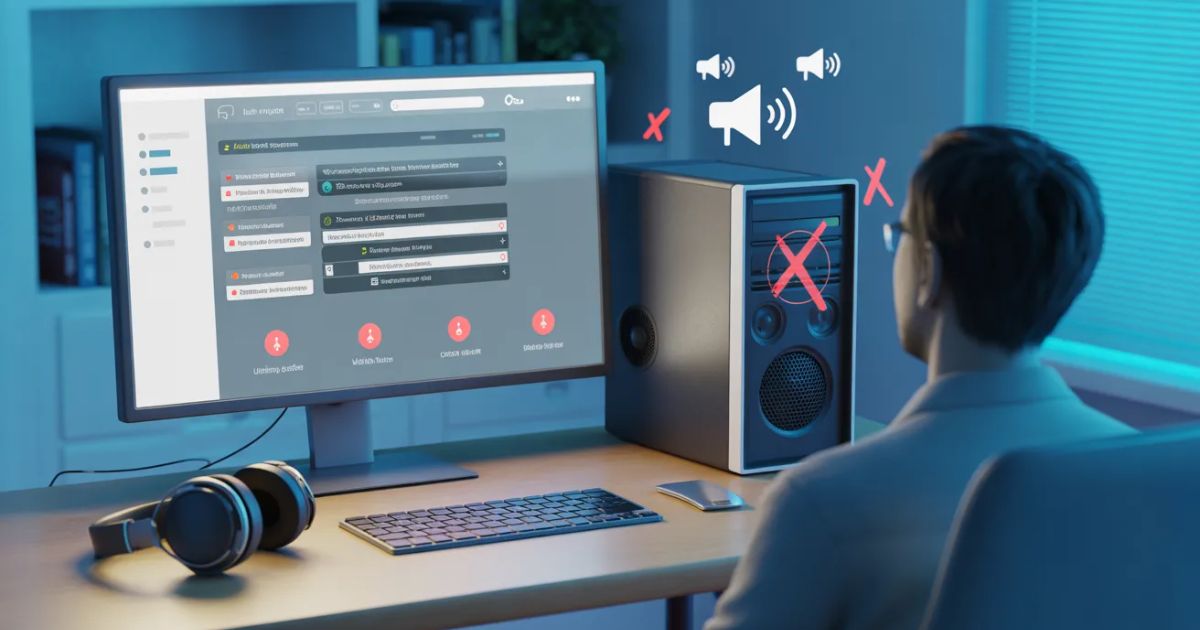
pc audio not working after driver update
Sudden silence after a software refresh usually points to an incompatible driver version or a corrupted driver installation. When PC audio not working after driver update occurs, your operating system fails to communicate with the motherboard audio chipset. You must verify your audio output configuration immediately to ensure Windows hasn’t routed sound to a non-existent digital audio interface.
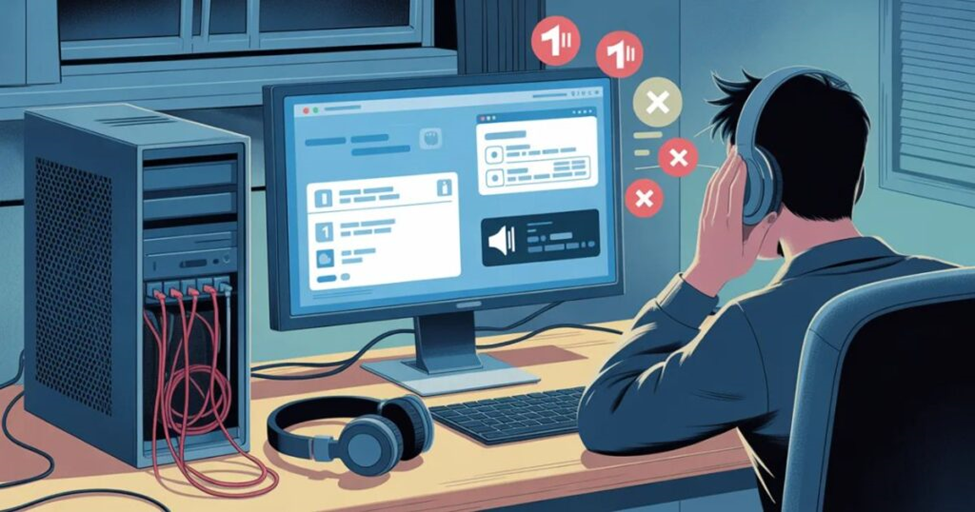
Most users facing Windows 10 no audio after update discover that the Windows sound configuration reset during the installation process. An outdated audio driver or a recent graphics driver update often triggers a software compatibility issue. Checking your default playback device in the sound control panel often reveals that the system simply selected the wrong output.
| Issue | Cause & Recommended Fix |
|---|---|
| No sound after driver update | Caused by an incompatible driver version. Use the Driver Rollback option in Device Manager to restore the previous working version. |
| HDMI audio not detected | Due to an HDMI audio conflict. Disable Nvidia High Definition Audio from Device Manager if you are not using HDMI sound. |
| Speaker not working after update | Usually caused by a corrupted driver installation. Perform a clean driver installation to fix the issue. |
1. Why PC Audio Stops Working After a Driver Update
An operating system conflict typically causes audio stopped working after update errors. When you install new software, it might crash the audio signal processing service or cause an audio driver crash. These conflicts happen when the new code doesn’t align with your motherboard drivers or existing firmware update files.
Your Realtek audio not working because the update likely broke the hardware driver integration path. A desktop audio problem often stems from system file corruption during the download phase. If your audio output device missing from the menu, the Windows Audio Endpoint Builder likely failed to initialize the new hardware ID.
2. Quick Things to Check First
Always verify that your laptop sound not working isn’t due to a simple mute toggle. Check the headphone jack detection by unplugging and replugging your speakers to trigger the sound control panel sensors. A PC sound suddenly stopped alert often resolves if you simply adjust the speaker configuration sliders.
Ensure your hardware compatibility issue isn’t just a physical cable failure. Examine the playback devices list to see if your primary speakers show as “Active.” Sometimes a Windows system update disables the digital audio interface, requiring you to manually re-enable it within the system diagnostics menu.
3. Restart Your Computer
A full reboot often clears system file corruption and fixes Windows 10 no audio after update instantly. This action forces the Windows Audio Endpoint Builder to reload and properly recognize your Realtek High Definition Audio hardware. Restarts act as the most basic audio troubleshooting steps for any desktop audio problem.
Rebooting also helps if your sound disappeared after GPU update by refreshing the Intel Display Audio settings. It allows the hardware driver integration to settle without interference from temporary cache files. Many no sound after Windows update cases vanish once the system performs a fresh handshake with the sound card driver.
4. Check Your Default Playback Device
Windows might switch your default playback device to a monitor or a virtual output after an update. Open the sound control panel and right-click your preferred speakers to set them as the primary audio output configuration. If your audio output device missing, check the “Show Disabled Devices” option to find it.
Setting the correct device fixes sound not working Windows 11 without needing deep safe mode troubleshooting. Your digital audio interface must match your physical hardware to avoid an operating system conflict. Most PC audio not working after driver update issues resolve once you point Windows to the correct Realtek High Definition Audio output.
5. Disable Nvidia HDMI Audio (If You Updated GPU Driver)
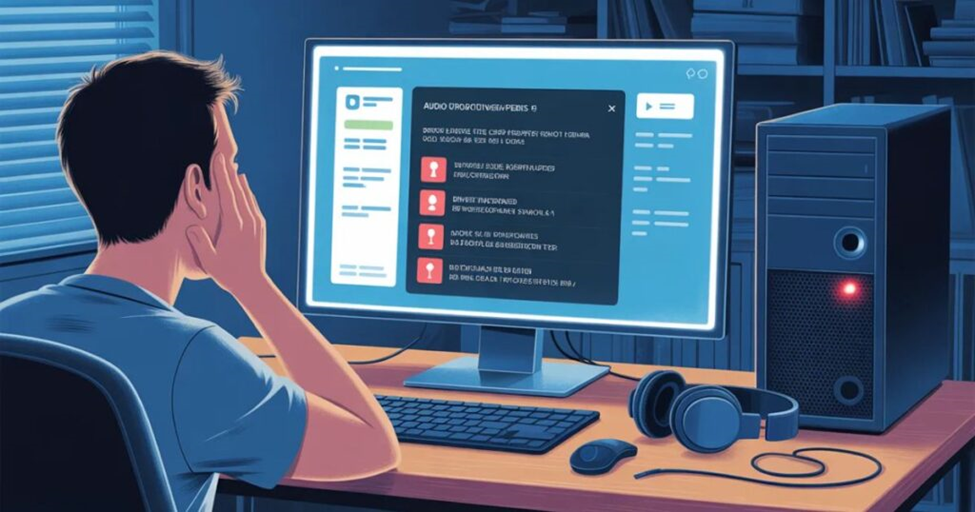
An Nvidia audio not working error occurs when the graphics driver update takes over your sound priority. This HDMI audio conflict sends sound to your monitor instead of your desktop speakers. Access the Device Manager settings and disable the Nvidia High Definition Audio to force the sound back to your motherboard.
This specific driver compatibility glitch is a leading cause for no sound after Nvidia driver update reports. By disabling the digital audio output on the GPU, you restore the audio signal processing to your internal sound card. This simple fix handles HDMI audio not detected errors for almost all gaming PCs.
6. Roll Back the Audio Driver (Most Effective Fix)
The driver rollback option provides the most reliable way to fix no sound after driver update problems. If the latest sound card driver contains bugs, Windows can revert to the previous motherboard drivers. Locate your device in Device Manager settings and select the “Roll Back Driver” button to restore functionality.
Rolling back fixes audio stopped working after update by removing the incompatible driver version. This process restores the original hardware driver integration that worked before the update. If your laptop sound not working, this “undo” feature is the fastest audio troubleshooting steps solution available.
7. Reinstall the Audio Driver
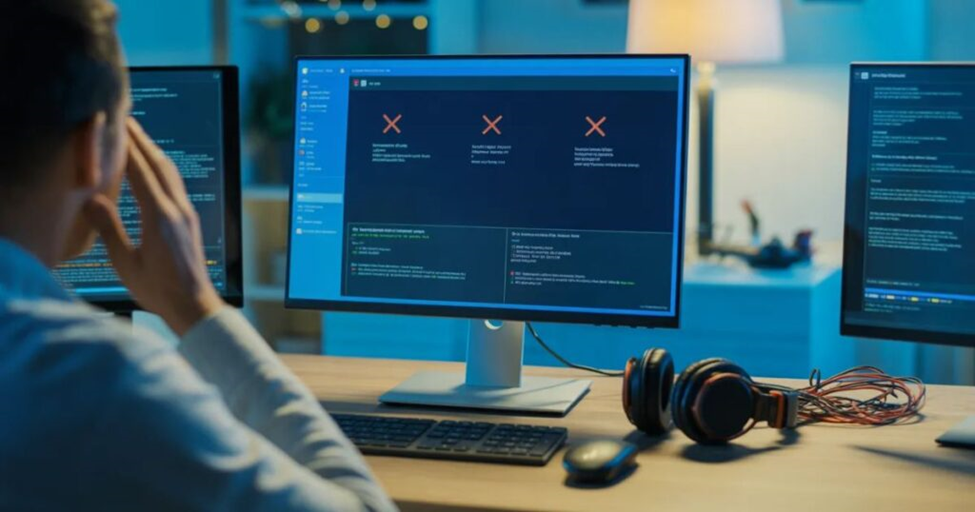
If you cannot roll back, you must reinstall audio driver Windows to fix a corrupted driver installation. Uninstall the current device via Device Manager settings and restart your computer to trigger automatic driver detection. This clean start removes system file corruption and resets your Windows sound configuration.
For the best results, perform a clean driver installation using files from your manufacturer’s website. This prevents driver compatibility errors that often plague generic motherboard drivers. Solving how to fix PC audio not working after driver update usually requires this fresh software replacement to stabilize the digital audio interface.
8. Fix No Sound After Nvidia Driver Update
To fix no sound after Nvidia driver update, run the installer again and select the “Clean Installation” checkbox. This removes old Nvidia High Definition Audio files that cause software compatibility issue glitches. Many users find their sound disappeared after GPU update because the installer didn’t clear the previous registry keys.
A clean driver installation ensures that the Intel Display Audio and Nvidia components don’t clash. It resolves the HDMI audio not detected problem by rebuilding the audio output configuration from scratch. This is a vital step for any user who noticed their PC sound suddenly stopped after a GeForce update.
9. Fix No Sound After Realtek Driver Update
If your Realtek audio not working, the driver likely failed to register the motherboard audio chipset correctly. Download the specific Realtek High Definition Audio driver from your laptop or motherboard manufacturer. These customized motherboard drivers offer better driver compatibility than the generic versions found through Windows Update.
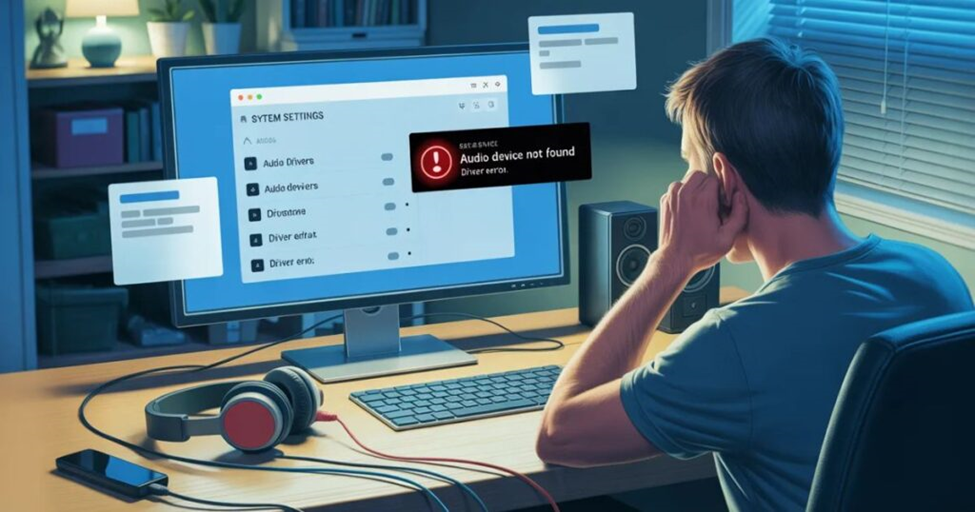
Check your audio enhancements in the sound control panel after the installation. Sometimes a Realtek audio not working error persists because “Spatial Sound” or other filters cause an audio driver crash. Correcting the speaker configuration within the Realtek Audio Manager software often restores the lost audio signal processing.
10. Restart Windows Audio Services
If the Windows audio service not running, your PC cannot produce any sound regardless of the volume. Use the “Services” app to restart the Windows Audio Endpoint Builder and the main Windows Audio service. This jumpstarts the audio signal processing engine and fixes the PC sound suddenly stopped error.
- Press Win + R, type services.msc, and press Enter.
- Right-click Windows Audio and select Restart.
- Right-click Windows Audio Endpoint Builder and select Restart.
This action fixes no sound after Windows update by refreshing the hardware driver integration without a reboot. It is a highly effective way to solve audio stopped working after update when the software simply stalls in the background.
11. Run Windows Audio Troubleshooter
The built-in audio troubleshooting steps can identify a sound device not detected error automatically. Navigate to your System Settings and run the Audio Troubleshooter to find an operating system conflict. This tool resets the Windows sound configuration and often fixes an audio output device missing from the list.
While it seems basic, the troubleshooter detects system file corruption that manual checks might miss. It is a great first step for Windows 10 no audio after update complaints. If your laptop sound not working, let Windows scan the hardware driver integration for common faults.
12. Disable Audio Enhancements
Many audio enhancements cause a software compatibility issue with new drivers. If your speaker not working after update, disable all “Enhancements” in the sound control panel properties. This simplifies the audio signal processing and stops the audio driver crash cycle.
Turning off these effects often fixes sound not working Windows 11 on modern laptops. It removes the layer of code that creates driver compatibility stumbles during a Windows system update. If you wonder why did my sound stop after updating drivers, these digital filters are frequently the primary cause.
13. Check Device Manager for Errors
Open Device Manager settings and look for a yellow exclamation mark on your sound controllers. This icon indicates a hardware compatibility issue or an incompatible driver version. Right-clicking the device and selecting “Update Driver” allows for automatic driver detection to attempt a repair.
If the sound device not detected, you may need to scan for hardware changes. This forces Windows to re-evaluate the motherboard audio chipset connection. Resolving these errors is essential when the driver update broke audio functionality on your desktop audio problem.
14. Use Manufacturer Drivers Instead of Generic Drivers
Generic drivers often lack the specific code for your motherboard audio chipset. Always download Realtek High Definition Audio or Intel Display Audio drivers directly from the manufacturer’s support site. This ensures perfect hardware driver integration and prevents PC audio not working after driver update.
| Provider | Driver Type | Benefit |
| OEM (Dell/HP) | Custom Motherboard Drivers | Best Driver Compatibility |
| Nvidia/AMD | Graphics Driver Update | Fixes HDMI Audio Conflict |
| Realtek | Realtek High Definition Audio | Restores Audio Signal Processing |
Manufacturer drivers include the correct audio output configuration for your specific model. They fix headphone jack detection issues that generic Microsoft drivers often ignore. Stop using “Basic Audio” drivers to avoid a recurring audio driver crash.
15. Check HDMI or DisplayPort Conflicts
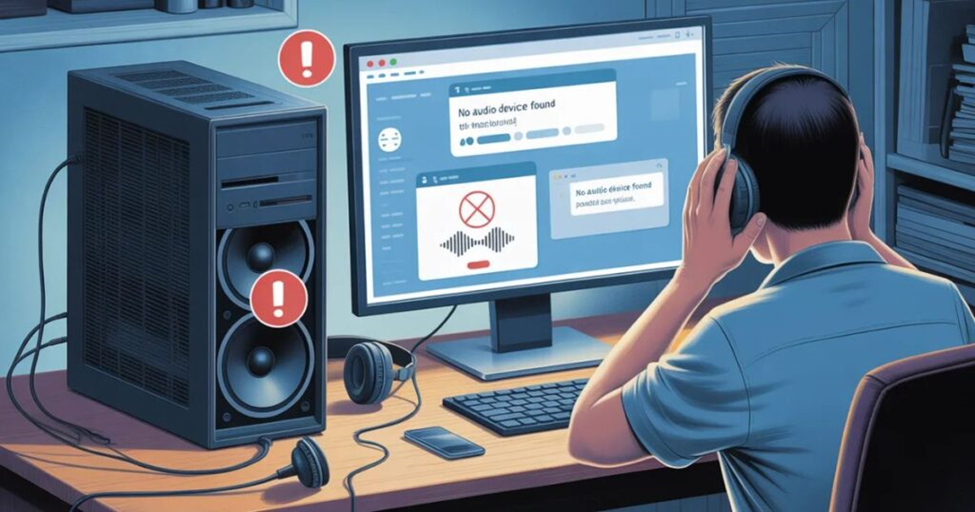
External monitors can trigger an HDMI audio conflict that silences your PC. If PC audio not working after driver update, disconnect your HDMI cable and restart your computer to reset the digital audio interface. This forces Windows to look for your internal motherboard audio chipset instead of the monitor.
Verify the digital audio output settings once you reconnect the screen. If HDMI audio not detected, try a different port or cable to rule out a physical hardware compatibility issue. This step is vital for users whose sound disappeared after GPU update while using multi-monitor setups.
16. Uninstall Recent Windows Update
If no sound after Windows update occurs, the specific Windows patch might be flawed. Go to your Update History and uninstall the most recent “Quality Update” to fix the operating system conflict. This reverts the Windows sound configuration to a state where your audio functioned properly.
Uninstalling the update removes the system file corruption introduced by the new patch. It is a powerful fix for Windows 10 no audio after update when driver-level changes fail. Always check for a newer firmware update afterward that might contain a permanent fix for the bug.
17. Perform a Clean GPU Driver Installation
Use safe mode troubleshooting with a driver removal tool to perform a clean driver installation for your GPU. This completely deletes old Nvidia High Definition Audio files that cause a software compatibility issue. It ensures no leftover data interferes with your audio signal processing.
Once you remove the old drivers, install the latest graphics driver update from the official source. This method solves no sound after Nvidia driver update by ensuring a fresh hardware driver integration. It is the “scorched earth” approach for fixing a stubborn desktop audio problem.
18. Reset Sound Settings
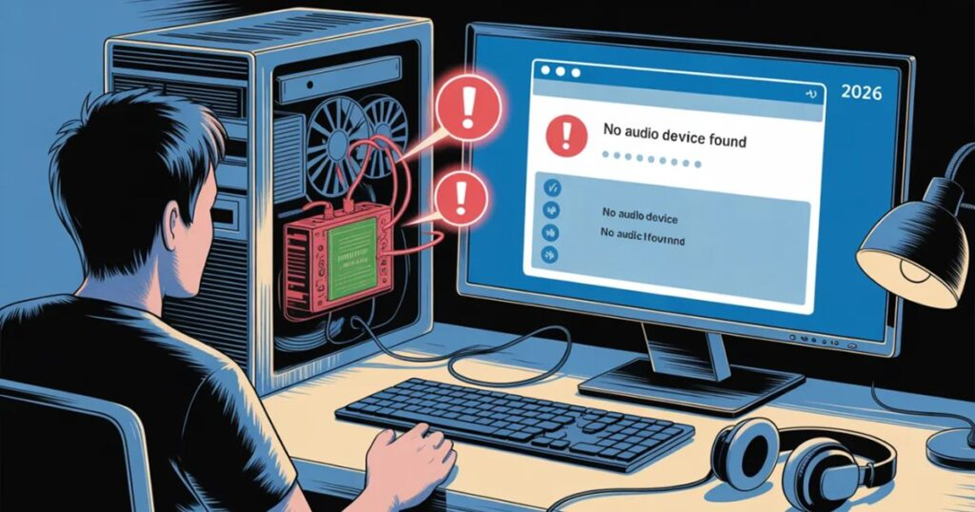
Windows provides a “Reset” option in the Advanced Sound Settings to restore the default Windows sound configuration. This clears out any messed-up audio output configuration caused by a driver update broke audio event. It returns all app volumes and playback devices to their factory baseline.
This reset fixes laptop sound not working when only certain programs are quiet. It re-aligns the digital audio interface and removes conflicting audio enhancements. If your PC sound suddenly stopped, a settings reset often clears the digital logjam instantly.
19. Check BIOS Audio Settings
A firmware update can occasionally disable the motherboard audio chipset at the hardware level. Enter your BIOS menu and ensure that the “Onboard Audio” setting is “Enabled.” If this setting is “Disabled,” Windows will report a sound device not detected error regardless of your drivers.
Fixing this in the BIOS is essential if you see an audio output device missing after a motherboard flash. It ensures the motherboard drivers have actual hardware to communicate with. This is a critical check for desktop audio problem cases that survive Windows-level troubleshooting.
20. Perform System Restore
If you have a system restore point, use it to go back to a time before the audio stopped working after update. This process undoes the corrupted driver installation and restores your original Windows sound configuration. It is the safest way to fix PC audio not working after driver update without losing files.
- Search for “Recovery” and select Open System Restore.
- Pick a date before the no sound after driver update started.
- Allow Windows to restart and revert the operating system conflict.
This restores the entire hardware driver integration to a known working state. It is a highly effective way to fix sound not working Windows 11 when you cannot identify the specific broken file.
21. Use an Automatic Driver Repair Tool
When manual audio troubleshooting steps fail, an automatic tool can perform automatic driver detection for you. These tools scan for an outdated audio driver and match your hardware ID with the correct WHQL-certified version. This eliminates the risk of an incompatible driver version causing more issues.
An automatic tool can quickly fix Realtek audio not working by finding the exact motherboard drivers you need. This is especially helpful for laptop sound not working where finding specific model drivers is difficult. It ensures a stable clean driver installation with minimal effort.
22. Repair Windows Installation (Final Fix)
If every other method fails, a Windows Repair Upgrade fixes deep system file corruption. This process reinstalls the OS core while keeping your personal data and apps intact. It clears any operating system conflict that prevents your audio signal processing from starting.
This final fix addresses PC audio not working after driver update when the registry is too damaged to repair manually. It refreshes the Windows Audio Endpoint Builder and all motherboard drivers simultaneously. After this, your sound not working Windows 11 issues will be completely resolved.
✅ SEO Optimized FAQs – PC Audio Not Working After Driver Update
1. Why is my PC audio not working after a driver update?
Your PC audio may stop working after a driver update due to:
- Incompatible driver version
- Corrupted installation
- Windows replacing the original driver
- Nvidia HDMI audio overriding default speakers
- Disabled Windows Audio services
Rolling back or reinstalling the driver usually fixes the issue.
2. How do I fix PC audio not working after a driver update in Windows 11?
To fix sound issues in Windows 11:
- Open Device Manager
- Roll back the audio driver
- Restart Windows Audio services
- Check default playback device
- Run Windows audio troubleshooter
If the issue continues, reinstall the latest compatible driver from the manufacturer’s website.
3. Why did my sound stop working after updating Nvidia drivers?
When you update Nvidia drivers, the system may install Nvidia High Definition Audio, which can override your default speakers through HDMI.
To fix this:
- Disable Nvidia HD Audio in Device Manager
- Reinstall the driver using Custom Installation
- Select Clean Installation
4. How do I fix Realtek audio not working after driver update?
If Realtek audio stops working:
- Restart Windows Audio service
- Reinstall Realtek High Definition Audio driver
- Install the latest version from your motherboard or laptop manufacturer
Avoid using generic Microsoft drivers.
5. How do I fix PC audio not working after a driver update in Windows 10?
In Windows 10, try these steps:
- Roll back the audio driver
- Uninstall recent Windows updates
- Disable audio enhancements
- Reset sound settings
- Perform a system restore
These steps resolve most post-update sound problems.
6. Why is my laptop sound not working in Windows 11?
Laptop sound may not work because:
- Audio driver conflict
- Disabled playback device
- HDMI audio override
- Corrupted system files
Running the Windows troubleshooter or reinstalling the audio driver often fixes it.
7. Why is my audio output device not detected after an update?
If your audio output device is missing:
- The driver may be corrupted
- The device may be disabled in BIOS
- Windows update may have replaced your driver
Reinstalling the correct driver usually restores detection.
8. Should I roll back or reinstall the audio driver?
Rolling back is usually faster and safer if the problem started immediately after updating.
If rollback isn’t available, perform a clean reinstall.
9. Can a Windows update break audio drivers?
Yes. Windows updates sometimes:
- Replace manufacturer drivers
- Install incompatible versions
- Modify sound settings
Uninstalling the latest update or restoring the system can fix this.
10. How do I restore sound after a driver update?
To restore sound:
- Roll back the driver
- Reinstall the correct audio driver
- Restart audio services
- Reset sound settings
- Perform system restore if needed
Most users resolve the issue within minutes using these steps.
🎯 Conclusion
To fix your PC audio not working after driver update, follow these top steps: ✔ Use the driver rollback option in Device Manager. ✔ Perform a clean driver installation of your Realtek High Definition Audio. ✔ Resolve any HDMI audio conflict in the sound control panel. ✔ Restart the Windows Audio Endpoint Builder in the Services menu.
Most desktop audio problem cases resolve within minutes using these audio troubleshooting steps. Restoring your digital audio interface is simple once you identify the incompatible driver version. Would you like me to help you locate the specific motherboard drivers for your PC model?
About the Author


Usman is the founder of TechnoWay and writes about AI tools, student productivity, and emerging technology trends. He focuses on practical, real-world use of AI for education, research, and everyday problem-solving.
His content is based on hands-on testing, simplified explanations, and responsible AI usage to help students and learners make better technology decisions.