your PC shuts down randomly without warning
Sudden power failure suggests your hardware is struggling with a critical instability. If your PC shuts down randomly without warning, you likely face an overheating thermal shutdown or a failing PSU symptoms. This guide explores every causes of sudden PC shutdowns to help you prevent your computer from shutting down unexpectedly.
Identifying why does my PC turn off randomly requires a focused look at your hardware health. When a PC keeps turning off by itself, the motherboard often triggers a safety cut-off to prevent a fire. You must learn how to fix a PC that turns off randomly to avoid permanent system file corruption on your drives.
Introduction: Understanding Random PC Shutdowns
A PC shutdown without warning serves as a vital safety mechanism for your internal components. This unexpected shutdown Windows 10 / 11 occurs when the system detects a voltage drop or a thermal spike. Whether it is a laptop powers off suddenly or a desktop blackout, the motherboard is protecting itself from damage.
Many users notice their computer shuts down randomly while running intense games or heavy editing software. This computer auto turn-off happens because the hardware demands more power than the PSU can provide. You should start troubleshooting PC that shuts down unexpectedly by looking at your power delivery and cooling efficiency.
How Sudden Shutdowns Affect Your Work and PC Health
Repeatedly losing power during a random restart PC event ruins your local data integrity. These Windows crashes randomly because the drive cannot finish writing files before the electricity vanishes. This leads to system file corruption, which eventually prevents Windows from booting or loading your favorite applications.
Beyond software, a PC keeps turning off by itself puts immense physical strain on your motherboard’s voltage regulators. These motherboard shutdown problems escalate as components suffer from rapid thermal expansion and contraction. You must follow steps to prevent random shutdowns to preserve your expensive motherboard drivers and processor life.
| Impact | Long-Term Consequence |
| Data | Loss of unsaved work and database errors |
| Storage | Increased bad sectors on the hard drive |
| Motherboard | Blown capacitors and circuit failure |
Export to Sheets
Overheating: The Most Common Cause of Unexpected Shutdowns
Excessive heat remains the top reason for a CPU overheating shutdown in modern computers. When CPU overheating causes temperatures to exceed safe limits, the system triggers an overheating thermal shutdown. This immediate power cut saves your silicon chips from melting under the intense heat of a high workload.
Check your fans if you suspect an overheating PC shutdown is ruining your experience. A GPU temperature and shutdown event typically happens when the graphics card lacks sufficient fresh air. You should check for overheating components by monitoring live sensors to ensure your PC cooling and airflow optimization works.
Checking CPU and GPU Temperatures to Prevent Shutdowns
You can prevent your computer from shutting down unexpectedly by watching your temperature levels. Use a tool like HWMonitor to test your power supply unit sensors alongside your thermal readouts. If your laptop powers off suddenly while feeling hot to the touch, you have found your primary culprit.
Differentiating between identifying hardware vs software shutdown causes becomes easier when you have live data. A laptop battery sudden power-off might even occur if the internal heat degrades the battery cells too quickly. Run a stress test CPU and GPU for shutdown diagnosis to see the exact degree that triggers the failure.
Dust, Fans, and Airflow: Keeping Your PC Cool
Regular cleaning of dust inside PC cases significantly improves your system’s reliability. Dust acts as an insulator that causes overheating thermal shutdown by trapping heat inside the fins of your heatsinks. Blast your vents with compressed air to maintain PC cooling and airflow optimization for every internal component.
Proactive system maintenance tips include checking every fan for mechanical failure or slow rotation. If your PC keeps turning off by itself, verify that no cables are blocking the fan blades. Good fan and cooling system problems management prevents the dreaded CPU overheating shutdown from occurring during summer months.
Power Supply Problems That Cause Random Shutdowns
A dying PSU often causes a PC shutdown without warning when the system draws high wattage. If you notice failing PSU symptoms, such as a loud buzzing or a clicking noise, your power supply issues in PC are severe. The PSU failure symptoms usually involve a total loss of power during a gaming session.
The hardware issues computer powers off frequently when the 12V power rail becomes too noisy or unstable. Understanding why does my PC turn off randomly often starts with checking if your PSU handles your power load. You must test your power supply unit if you suspect the PSU failure symptoms are causing your blackouts.
Testing Your PSU: Signs of Failure
Learning how to fix unexpected PC shutdowns requires you to learn how to test PC power supply health. Watch for failing PSU symptoms like the computer refusing to turn on for several minutes after a crash. These PSU failure symptoms indicate that the internal protection circuits are struggling to manage the electrical current.
| PSU Warning Sign | Meaning |
| High-pitched whine | Failing capacitors or coil whine |
| Burning smell | Immediate fire hazard and hardware failure |
| Rapid reboots | Unstable voltage regulation on the 12V rail |
Battery and Laptop-Specific Shutdown Causes
A laptop powers off suddenly because the chemical cells in the battery can no longer hold a steady charge. If your laptop battery dies suddenly, the voltage likely dropped below the minimum threshold required to keep the PC on. This laptop battery sudden power-off often occurs without any low-battery warning from Windows.
When troubleshooting PC that shuts down unexpectedly, check for AC adapter problems (laptop) as well. Sometimes the laptop battery dies suddenly because the charger provides intermittent power or gets too hot. A laptop battery health check will confirm if your hardware requires a physical battery replacement or just a software calibration.
Calibration and Battery Health Check for Laptops
Following a laptop battery calibration guide can stop your laptop powers off suddenly by syncing the sensor with the actual charge. You must perform a laptop battery health check to see the current full charge capacity versus the design capacity. If the laptop battery dies suddenly, the wear level is likely above 50% of its original life.
You can prevent unexpected shutdowns by replacing a battery that shows poor health in the Windows battery report. This laptop battery calibration guide ensures your laptop hibernates correctly instead of just cutting power. Proper laptop battery health check routines save you from losing work when you move away from the wall outlet.
Motherboard and Hardware Failures That Trigger Shutdowns
Motherboard problems PC shuts down your system when the electrical traces on the board experience a short circuit. If your computer shuts down randomly, inspect the board for “blown” capacitors that look swollen or leaky. These motherboard shutdown problems usually require expert repair or a total hardware replacement solutions plan.
A motherboard problems PC shuts down situation might also stem from a loose screw touching the case. Ensure that your hardware issues computer powers off isn’t caused by metal-on-metal contact where it shouldn’t be. Precise motherboard shutdown problems testing involves removing all non-essential parts to see if the core system remains stable.
RAM and Storage Issues Leading to Random Power-Offs
A RAM failure causing shutdown events usually follows a brief system freeze or a blue screen error. Use the memory diagnostics tool to check your memory sticks for physical defects or timing errors. If RAM failure PC is the cause, your Windows crashes randomly because the system cannot read vital data.
While a hard drive causing sudden shutdown is rare, an electrical short in the drive controller can kill the power. If your PC keeps turning off by itself during file saves, your SSD might have a terminal hardware fault. Always prioritize the memory diagnostics tool to rule out memory issues before buying new storage.
Driver Conflicts and Updates to Prevent Shutdowns
You should update drivers to prevent shutdown errors caused by software giving bad instructions to your hardware. A driver conflicts causing shutdown event can trick the system into thinking it is overheating when it isn’t. Keeping your graphics driver update current ensures the GPU temperature and shutdown logic stays accurate.
If your computer shuts down randomly, check the Windows Device Manager for any yellow warning triangles. A driver conflicts causing shutdown is easy to fix by performing a clean installation of your chipset software. This is a critical part of how to fix a PC that turns off randomly without replacing any physical parts.
Operating System Problems and Corrupt System Files
Windows random shutdowns often occur because a core system file has become unreadable or damaged. This system file corruption causes the Windows kernel to panic and shut down to prevent further drive damage. You can prevent your computer from shutting down unexpectedly by running the SFC and DISM repair commands.
If your Windows 10 / 11 sudden shutdown happens at the same time every day, a scheduled task might be corrupted. This system file corruption mimics hardware failure but is actually a software bug. Include these scans in your system maintenance to avoid sudden shutdowns to keep your OS running smoothly.
Windows Event Viewer: How to Diagnose Shutdown Errors
The Windows Event Viewer logs provide a detailed history of why your computer died. By checking Event Viewer logs for shutdown errors, you can find the specific “Critical” entry that matches your crash time. This helps in identifying hardware vs software shutdown causes by revealing the error code leading up to the blackout.
Analyzing Windows Event Viewer logs is the most professional way to handle a PC shutdown without warning. If you see “Kernel-Power Event 41,” you know the hardware lost power before it could record a specific error. Use these Event Viewer logs for shutdown errors to narrow down your search to either the PSU or the motherboard.
Malware, Viruses, and Unexpected Shutdowns
A virus or malware causing random shutdowns can overwhelm your processor until it hits a thermal limit. Some malware and virus affecting PC health will intentionally crash the system to prevent you from running a scan. You must prevent your computer from shutting down unexpectedly by keeping your security software updated.
If your PC keeps turning off by itself, a “crypto-miner” virus might be pushing your GPU to 100% usage. This leads to a GPU temperature and shutdown event because the virus ignores your cooling fan limits. Removing the malware and virus affecting PC is a mandatory step in how to fix unexpected PC shutdowns.
UPS and Surge Protector Issues Affecting Power Supply
Your surge protector issues might be causing tiny power dips that the PSU cannot handle. If the surge protector and UPS troubleshooting reveals a failing battery, your PC has no protection against local grid flickers. An electrical fluctuation and PC sensitivity mean you need high-quality power filtering to stay online.
A UPS battery failures event means the backup power will not kick in during a minor brownout. These electrical fluctuation and PC issues cause a random restart PC that looks like a hardware failure. Constant surge protector and UPS troubleshooting ensures your machine always receives clean, 120V or 230V electricity.
BIOS Settings That Can Cause Auto Shutdown
Incorrect BIOS settings affecting power-off triggers can make your PC too sensitive to small voltage changes. If your BIOS power settings include aggressive “Anti-Surge” limits, the system might shut down during normal gaming. Resetting your BIOS to “Optimized Defaults” is a great way to prevent unexpected shutdowns.
Check the BIOS settings affecting power-off section for “Thermal Throttling” or “Shutdown Temperature” limits. If these are set too low, you will experience an overheating thermal shutdown even if the PC feels cool. Adjusting BIOS power settings is a vital part of troubleshooting PC that shuts down unexpectedly.
Automatic Restart Settings in Windows and How to Disable Them
The Windows automatic restart after crash setting often hides the helpful “Blue Screen” error code from you. By disabling this, you force Windows to show you exactly why the PC shutdown without warning occurred. This is a primary step in how to fix a PC that turns off randomly using diagnostic data.
Find the automatic restart settings Windows in the “Advanced System Settings” menu under Startup and Recovery. Turning off the Windows automatic restart after crash gives you time to photograph the error code before rebooting. This makes identifying hardware vs software shutdown causes much faster for any user.
How to Perform Stress Tests to Identify the Cause
You can stress test CPU and GPU for shutdown diagnosis to find the exact breaking point of your system. If the computer shuts down randomly as soon as the GPU hits 100%, you have a power or heat issue. This CPU / GPU stress testing proves whether your PSU can actually handle the hardware you installed.
During a stress test CPU and GPU for shutdown diagnosis, watch for voltage drops on the 12V and 5V rails. If the power sags before the PC keeps turning off by itself, your PSU is likely failing. Systematic CPU / GPU stress testing is the only way to confirm power supply issues in PC without buying a new unit.
Routine Maintenance Tips to Prevent Random Shutdowns
Performing system maintenance to avoid sudden shutdowns keeps your PC running like new for years. This includes regular cleaning of dust inside PC cases and reapplying thermal paste every two years. Reliable system maintenance tips help you catch failing PSU symptoms before they damage your motherboard.
| Task | Frequency | Benefit |
| Dusting | 4 Months | Prevents overheating thermal shutdown |
| Driver Updates | Monthly | Stops driver conflicts causing shutdown |
| Cable Check | Yearly | Avoids hardware issues computer powers off |
Export to Sheets
Following these steps to prevent random shutdowns saves you money on expensive repairs. You can prevent your computer from shutting down unexpectedly by staying ahead of the dust and heat. Consistent system maintenance to avoid sudden shutdowns is the mark of a smart PC owner.
When to Seek Professional Help or Replace Hardware
If you have tried every fix and the PC keeps turning off by itself, the motherboard or CPU might be dead. Seeking hardware replacement solutions is necessary when the core silicon has suffered permanent thermal damage. A pro can test your power supply unit with an oscilloscope to find electrical noise that a standard meter misses.
Don’t ignore motherboard problems PC shuts down warnings, as they can lead to an electrical fire. Choosing hardware replacement solutions for a failing PSU or motherboard is a wise investment in your safety. If your laptop powers off suddenly after a battery swap, the internal charging circuit is likely the culprit.
PC Shuts Down Randomly Without Warning – Causes, Fixes & Hardware Troubleshooting Guide
Below are professionally written, SEO-optimized FAQ answers to help diagnose and fix unexpected PC shutdowns and crashes.
1. Why does my computer shut down randomly without warning?
Random shutdowns are commonly caused by overheating, a failing power supply (PSU), faulty RAM, motherboard issues, outdated drivers, or corrupted system files. In most cases, overheating triggers an automatic shutdown to protect internal components from damage.
2. How to fix PC unexpected shutdown?
Follow these troubleshooting steps:
- Clean dust from fans and vents
- Monitor CPU and GPU temperatures
- Check or replace the power supply
- Update Windows and device drivers
- Run System File Checker (
sfc /scannow) - Test RAM using Windows Memory Diagnostic
- Scan for malware
If the issue persists, professional hardware testing may be required.
3. Can faulty RAM cause shutdown?
Yes. Defective RAM can cause random shutdowns, blue screen errors (BSOD), freezing, and unexpected restarts. Faulty memory disrupts system operations, leading to crashes.
4. Why does my PC crash without warning?
Unexpected crashes usually result from driver conflicts, corrupted system files, overheating, failing hardware, or malware infections. Checking Windows Event Viewer can help identify the root cause.
5. How to tell if RAM is causing crashes?
Signs of bad RAM include:
- Frequent blue screen errors
- Random freezing
- Applications closing suddenly
- System restarts
- Beep codes during startup
Running a memory diagnostic test can confirm the issue.
6. What are the signs of a failing CPU?
Although rare, CPU failure may show these symptoms:
- System crashes under load
- Persistent overheating
- Failure to boot
- Random shutdowns
- System instability even after reinstalling Windows
7. What are the signs of a failing PC?
General hardware failure indicators include:
- Slow performance
- Unusual noises from inside the case
- Random shutdowns
- Display glitches
- Frequent blue screens
8. How do I find out what’s causing my PC to crash?
To diagnose the issue:
- Check Event Viewer (Windows Logs → System)
- Monitor temperatures using hardware tools
- Run memory tests
- Check disk health (CHKDSK)
- Test the power supply
- Update drivers and BIOS
This structured approach helps isolate the exact cause.
9. Is using 80% of RAM bad?
No. Using 80% of RAM is generally normal. However, if usage consistently reaches 90–100%, it may cause slow performance or instability, indicating the need for a RAM upgrade.
10. How to tell if PC RAM is failing?
Common symptoms include:
- Blue screen errors
- Corrupted files
- Random restarts
- Failure to boot
- Continuous beeping at startup
Memory testing tools can confirm hardware failure.
11. What is the average lifespan of RAM?
RAM typically lasts 8–12 years or longer under normal operating conditions. Since it has no moving parts, failure is uncommon unless affected by power surges, overheating, or manufacturing defects.
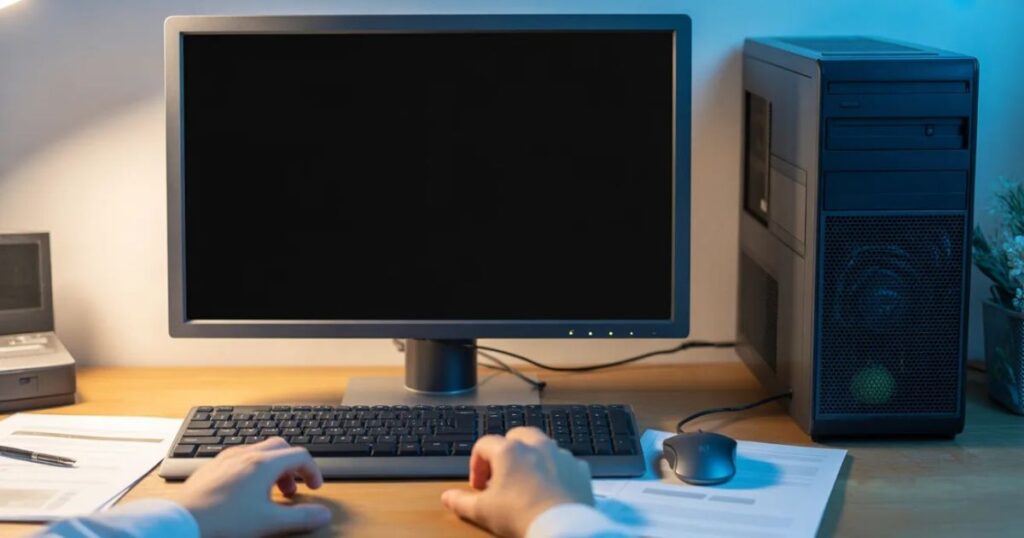
Conclusion: Steps to Keep Your PC Running Smoothly
Solving the mystery of why your PC shuts down randomly without warning involves testing heat, power, and software. By checking your Event Viewer logs for shutdown errors and cleaning your fans, you can fix 90% of these issues. Remember that a PC keeps turning off by itself is usually trying to protect itself from a larger failure.
Always keep your graphics driver update current and perform regular cleaning of dust inside PC cases. If you manage your PC cooling and airflow optimization, you will avoid most unexpected shutdown Windows 10 / 11 scenarios. Would you like me to guide you through the specific commands to check your Windows Event Viewer logs right now?
About the Author


Usman is the founder of TechnoWay and writes about AI tools, student productivity, and emerging technology trends. He focuses on practical, real-world use of AI for education, research, and everyday problem-solving.
His content is based on hands-on testing, simplified explanations, and responsible AI usage to help students and learners make better technology decisions.