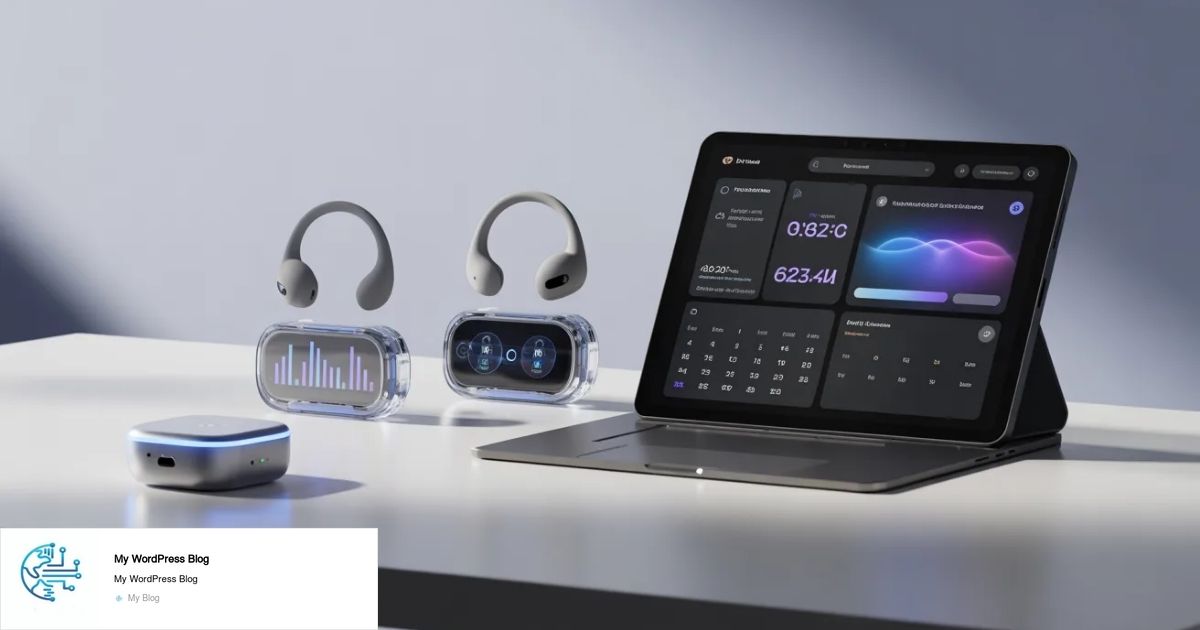
AI-powered productivity gadgets
✅ Introduction
AI-powered productivity gadgets are quickly becoming essential tools for people who want to work smarter, not harder. From professionals and students to creators and remote workers, these gadgets use artificial intelligence to automate tasks, save time, and reduce mental load. According to common AI overview summaries, the biggest advantage of AI-powered gadgets is their ability to learn user behavior and adapt in real time—making daily workflows faster and more efficient.
Discussions on Reddit often highlight that AI-powered productivity gadgets are most valuable when they solve real problems, such as managing schedules, improving focus, transcribing meetings, or organizing information automatically. Users frequently praise gadgets that combine simplicity with smart AI features, like voice assistants, AI note-taking devices, smart planners, and task-management tools. Reddit users also emphasize that the best gadgets don’t replace human effort but enhance productivity by removing repetitive and distracting tasks.
As AI technology continues to evolve, AI-powered productivity gadgets are becoming more affordable, accurate, and user-friendly. Whether it’s an AI smart assistant, an intelligent desk gadget, or a wearable productivity tool, these devices are shaping the future of work and personal efficiency. Choosing the right AI-powered productivity gadget can significantly improve focus, time management, and overall performance in both professional and everyday life.
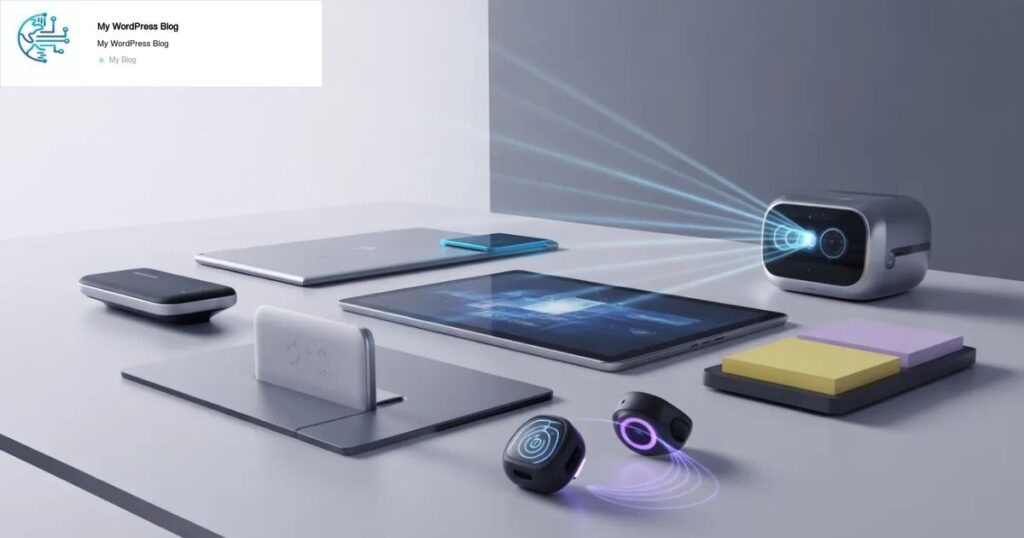
Core Strategic Pillars for 2026
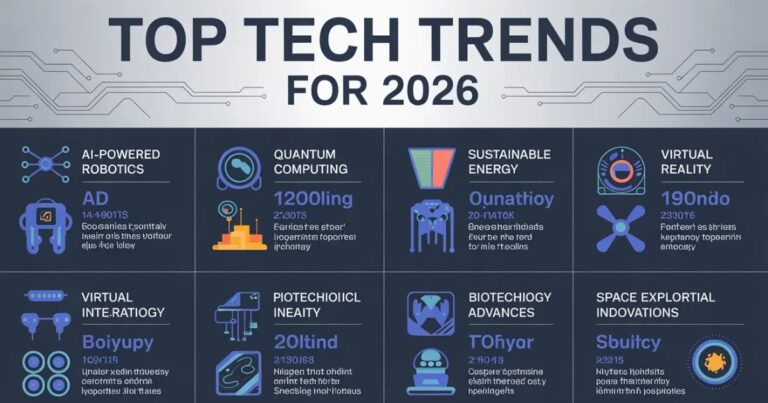
- The Rise of Agentic AI: Moving beyond basic prompts, 2026 is dominated by Multiagent Systems. These are goal-driven AI “colleagues” that autonomously execute complex workflows—such as supply chain negotiation or personalized learning paths—with minimal human intervention.
- Cloud 3.0 and Geopatriation: Infrastructure has evolved into a diversified ecosystem. Organizations are shifting toward Sovereign Clouds and hybrid models to ensure data residency compliance and low-latency edge processing.
- Post-Quantum Readiness: With quantum advantage appearing on the horizon, 2026 is the critical deadline for implementing Post-Quantum Cryptography (PQC) to protect long-term data against future decryption threats.
- Sustainable-by-Design IT: Environmental impact is no longer a secondary metric. High-efficiency Neuromorphic Computing and green data centers are now mandatory board-level requirements to manage the massive energy demands of AI supercomputing.
- Physical AI & Robotics: The digital-physical divide is blurring. In 2026, Physical AI powers robots and drones with advanced spatial reasoning, transforming logistics, healthcare, and disaster response into high-precision operations.
In this landscape, the ultimate strategy is Preemptive Governance. By embedding trust and transparency into the very fabric of your tech stack, you ensure that your organization doesn’t just survive the rapid pace of change but leads the transformation into 2027 and beyond.
What are AI-Powered Productivity Gadgets in 2026?
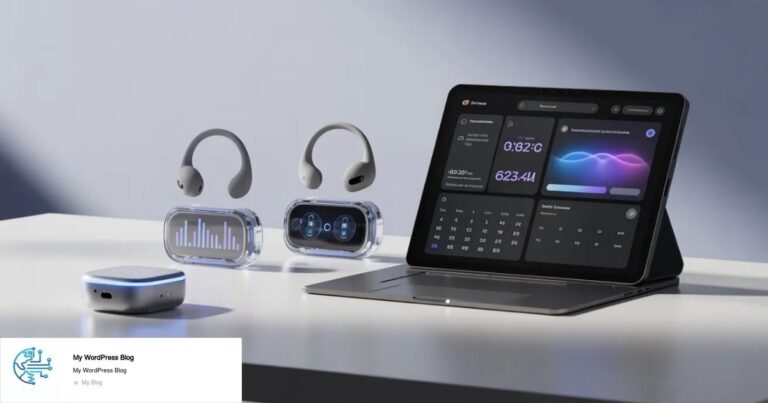
To understand the 2026 landscape, we must distinguish between AI-powered productivity gadgets and AI-powered productivity gadgets. While software tools like ChatGPT, Claude, and Gemini live on your screen, AI gadgets are physical hardware—wearables, desktop assistants, and IoT devices—with specialized Neural Processing Units (NPUs) designed to process AI locally and instantly.
In 2026, these gadgets aren’t just “connected”; they are “context-aware.” They don’t wait for your command; they anticipate your needs based on your environment, biometrics, and schedule.
How AI-Powered Productivity Gadgets Transform Workflows
The integration of AI into physical hardware has fundamentally rewritten daily routines:
- Zero-Latency Automation: Devices record, transcribe, and summarize meetings in real-time, eliminating the “admin lag” that once followed every call.
- Cognitive Offloading: Wearables track your focus levels and suggest breaks or deep-work sessions, acting as an external prefrontal cortex.
- Enhanced Creativity: Gadgets act as “creative sparring partners,” providing tactile feedback or voice-guided brainstorming that feels more natural than typing into a chat box.
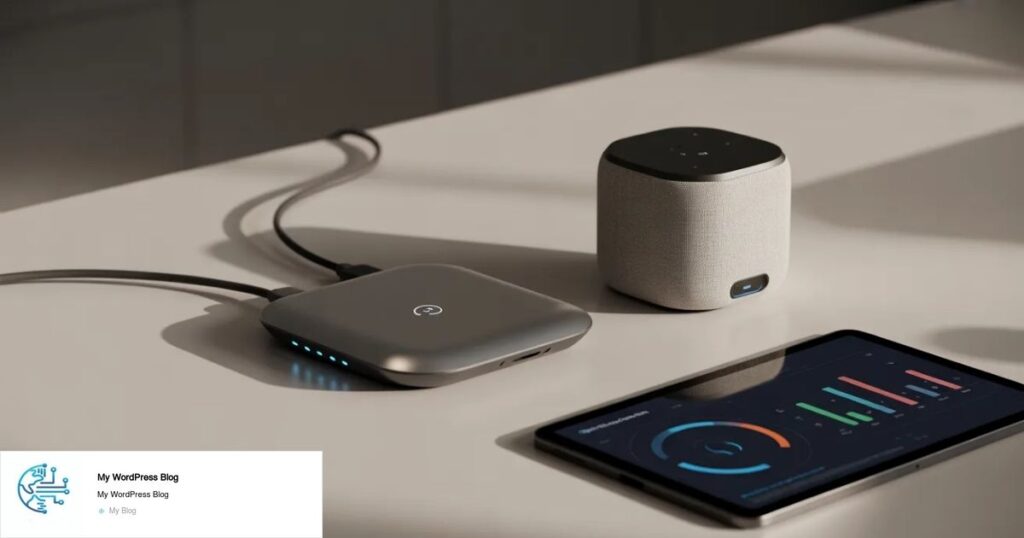
Best Categories of AI-Powered Productivity Gadgets in 2026
AI Gadgets for Communication & Collaboration
These devices solve the “lost in translation” problem. Smart earbuds now offer live, bi-directional translation, while AI cameras automatically frame and edit video calls for professional-grade collaboration across borders.
AI Gadgets for Organization & Time Management
The 2026 category of organization gadgets includes “Ambient Schedulers”—devices that sit on your desk and use visual cues to help you prioritize tasks based on real-time deadlines and your actual energy levels.
AI Gadgets for Creative Creation
This category features smart styluses and haptic gloves that integrate with generative AI. As you draw or design, the AI suggests refinements or generates high-fidelity textures in real-time, bridging the gap between imagination and execution.
AI Gadgets for Research & Knowledge Synthesis
Dedicated research tablets and e-ink “Personal Knowledge Bases” allow users to upload hundreds of documents. These devices then serve as an offline, private “expert” on that specific data, allowing for deep synthesis without internet distractions.
AI Gadgets for Smart Automation
Desktop robots and smart home hubs now act as “Office Orchestrators.” They sense when you leave for a meeting and automatically prepare your next environment—adjusting lights, pre-loading files, and silencing notifications.
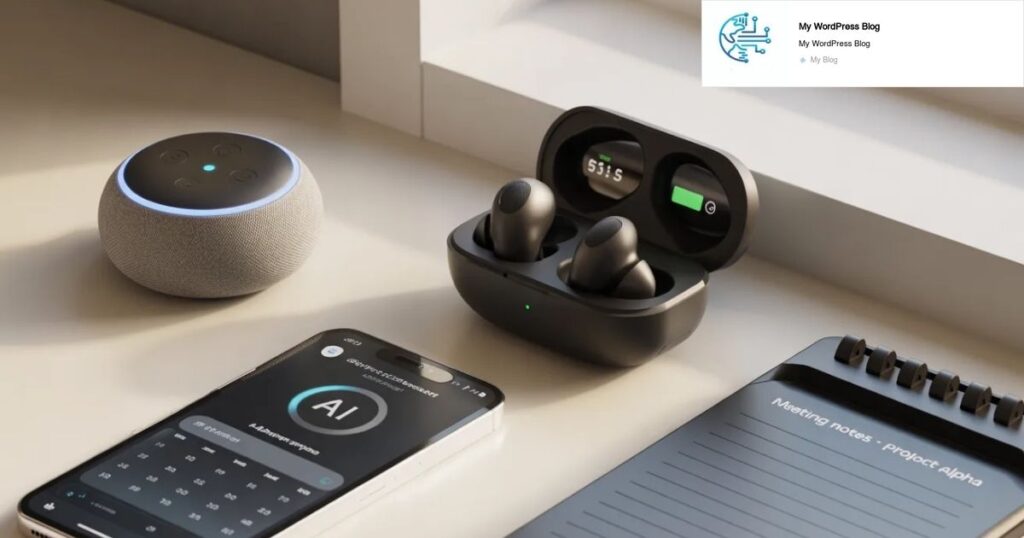
Top AI-Powered Productivity Gadgets You Should Know in 2026
Gemini-Powered Smart Assistants
Integrated deeply into the Google Workspace ecosystem, these standalone desk units act as a physical “portal” to your Gmail, Drive, and Docs. They use multimodal AI to see the documents on your desk and suggest edits or filing actions instantly.
AI-Integrated Wearable Devices
- Smart Glasses (e.g., Meta Ray-Ban/Xreal): These have evolved into the ultimate heads-up display for productivity, offering real-time captions for conversations and visual object recognition.
- Smart Rings (e.g., Evie Ring/Circular): Beyond health, these rings now feature gesture-based productivity controls, allowing you to manage your smart office with a flick of a finger.
AI Voice-Controlled Gadgets and Smart Speakers
Next-gen smart speakers now feature “Agentic AI.” Instead of just setting timers, they can manage complex tasks like “order more ink and schedule a pickup for the old cartridges” autonomously.
AI Meeting Assistants & Smart Notetakers
Hardware like the Plaud NotePin or HiDock P1 have replaced manual note-taking. These devices use directional microphones to identify speakers and produce structured Action Item lists within seconds of a meeting’s end.
AI Email Assistants & Todo Devices
Next-gen devices running Copilot Pro or Gemini for Gmail now exist as small, e-ink displays that sit by your monitor. They triage your inbox in the background, highlighting only the most critical “human-required” messages.
AI-Driven Scheduling and Task Prioritization Devices
Physical “Focus Timers” now integrate with tools like Motion or Reclaim to physically manifest your schedule. They change colors to signal deep-work periods and automatically block out distractions.
Personal AI Devices that Automate Repetitive Tasks
Devices like the Rabbit R1 or Humane AI Pin act as universal remotes for your digital life. They execute multi-step commands—like “book a flight and add it to my calendar”—without you ever opening an app.
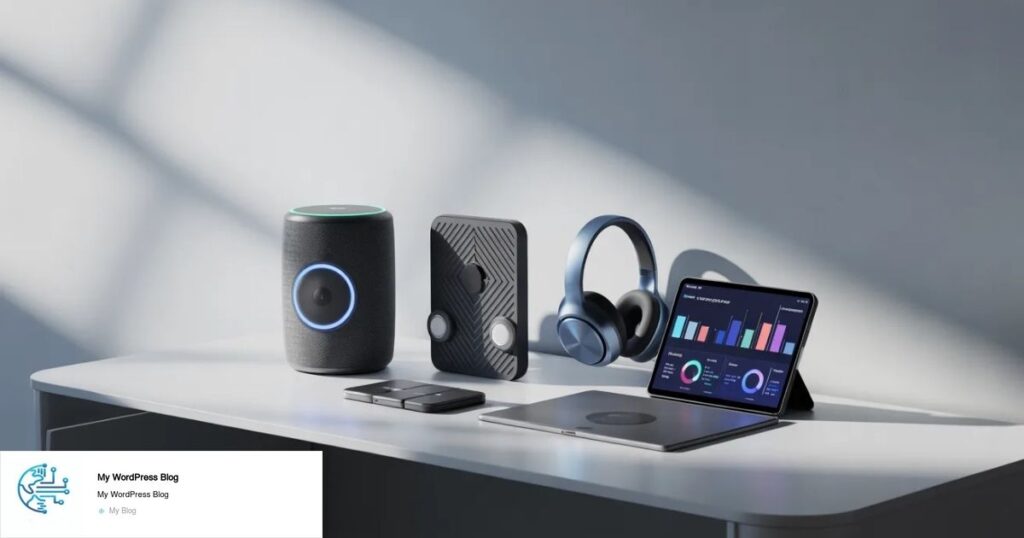
How to Choose the Right AI-Powered Productivity Gadgets for You
With many options in 2026, use these five criteria to find your perfect match:
- Ecosystem Compatibility: Ensure it plays nice with your existing stack (Google, Microsoft, Apple).
- On-Device vs. Cloud AI: Favor gadgets with NPUs for faster, more private processing.
- Privacy Standards: Check for “Physical Kill Switches” on microphones and cameras.
- Ease of Use: If it takes more than five minutes to set up, it may hinder rather than help.
- Cost vs. Utility: Only invest if the gadget saves you at least 3 hours per week.
Real-World Productivity Gains with AI Gadgets in 2026
- The “Executive” Workflow: By using an AI meeting assistant and a smart ring for focus tracking, executives report saving an average of 12 hours per week on administrative tasks.
- The “Developer” Workflow: Using smart AR glasses to display documentation alongside their code, engineers have seen a 30% increase in “flow state” duration.
- The “Student” Workflow: AI math-solving tablets provide step-by-step logic, helping students master complex concepts 2x faster than traditional methods.
Ethical and Privacy Considerations
As AI gadgets become more invasive—literally wearing them on our faces—privacy is the #1 concern. In 2026, “Privacy-by-Design” is the industry gold standard.
- Data Ownership: Always choose gadgets that allow for “Local Only” storage.
- Transparency: Devices should have clear visual indicators (LEDs) when recording or analyzing audio.
- Security: Ensure your gadgets support biometric encryption to prevent data exfiltration.
Future of AI-Powered Productivity Gadgets Beyond 2026
The horizon looks even more integrated. We are moving toward Agentic AI Gadgets—devices that don’t just prompt you, but autonomously negotiate and execute tasks across your digital life. We also expect the rise of Brain-Computer Interfaces (BCIs) for ultra-low-latency “thought-to-text” productivity by 2028.
Conclusion
AI-powered productivity gadgets have turned the “dream of the smart office” into a tangible reality in 2026. By choosing tools that augment your specific strengths and automate your unique weaknesses, you can reclaim your most valuable asset: time. Use these gadgets intelligently—not to replace your thinking, but to amplify your potential.
FAQ: AI-Powered Productivity Gadgets
1. What are AI-powered productivity gadgets? They are physical hardware devices (like smart rings, glasses, or desk assistants) that use integrated AI to automate and optimize work tasks.
2. How do AI gadgets help productivity? They reduce “cognitive load” by handling repetitive tasks like note-taking, scheduling, and data synthesis in the background.
3. Are AI productivity gadgets safe to use? Most 2026 gadgets use local processing to keep your data private, but always check for “Privacy-by-Design” certification.
4. Can AI gadgets replace human workflows? They replace tasks, not jobs. They handle the “drudge work” so humans can focus on strategy and creativity.
5. What’s the difference between AI tools and AI gadgets? Tools are software (apps); gadgets are physical hardware (devices).
6. Do I need multiple AI gadgets or a single all-in-one device? In 2026, a “hub and spoke” model works best—one central smart assistant and 1-2 specialized wearables.
7. Are there free AI-powered gadgets? While software is often free, the hardware typically requires an upfront cost or a hardware-as-a-service subscription.
8. How much do AI-powered productivity gadgets cost? Prices range from $150 for smart rings to $600+ for high-end AR productivity glasses.
9. Are AI gadgets good for students? Yes, especially smart notetakers and AI-powered tablets that offer personalized, step-by-step explanations.
10. Can AI gadgets integrate with existing apps? Yes, most are built to sync seamlessly with Google Workspace, Microsoft 365, and Zapier.
11. What’s next for AI gadgets in 2027? Expect the rise of “Context-Aware Wearables” that sense your emotional state and adjust your environment accordingly.
12. Can I use these gadgets offline? Many 2026 gadgets feature edge-AI, allowing for basic transcription and task execution without an active internet connection.
About the Author


Usman is the founder of TechnoWay and writes about AI tools, student productivity, and emerging technology trends. He focuses on practical, real-world use of AI for education, research, and everyday problem-solving.
His content is based on hands-on testing, simplified explanations, and responsible AI usage to help students and learners make better technology decisions.